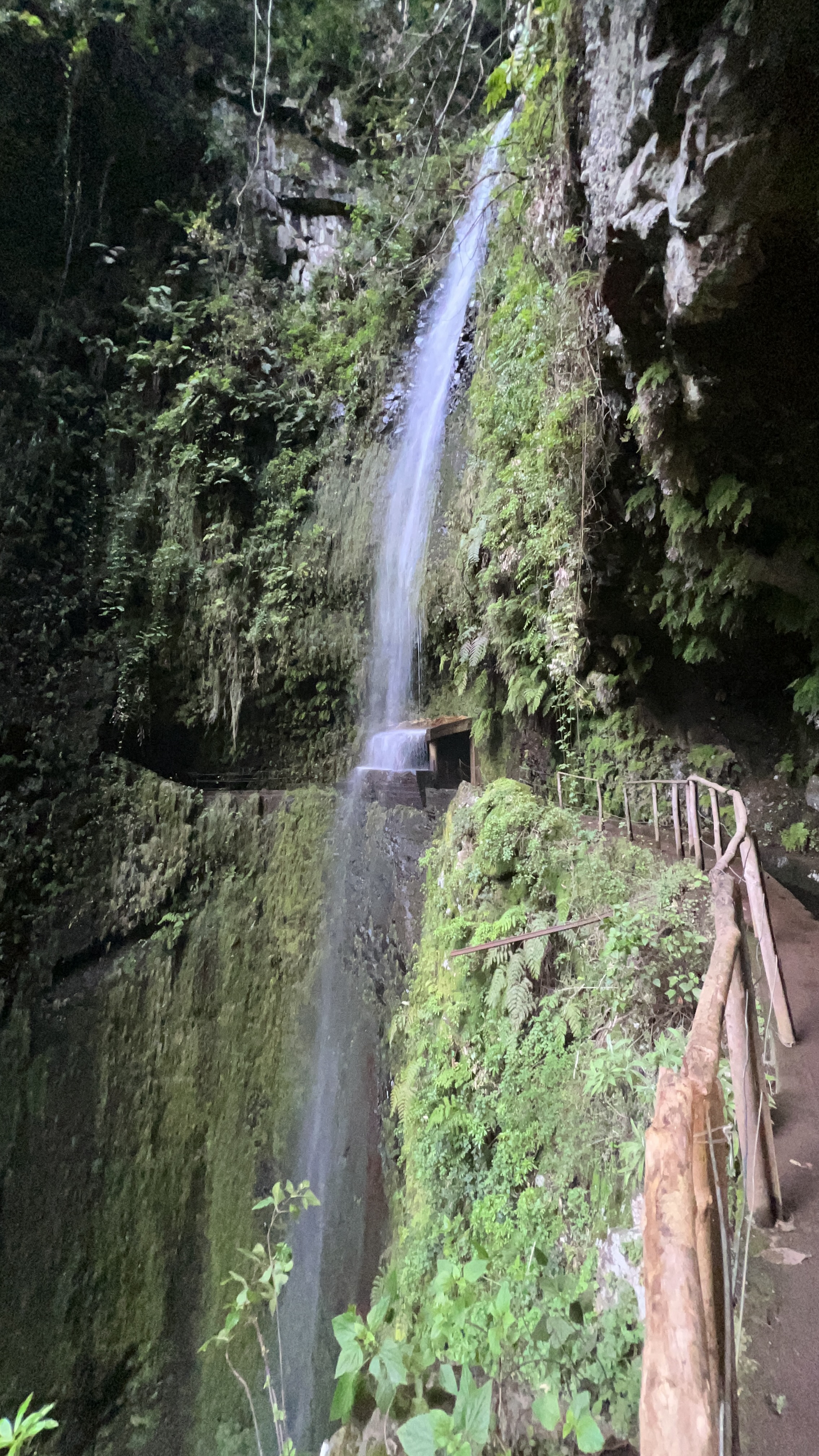
Madeira has long been one of Germany's favourite holiday destinations — and for good reason. The island offers something rare: a warm, green, dramatically beautiful escape that feels completely unlike the rest of Europe. No flat beaches, no crowded resorts, no baking heat in August. Just mountains, ocean, and flowers everywhere.
Germans make up one of the largest groups of visitors to Madeira every year. Direct flights operate from Frankfurt, Munich, Berlin, Düsseldorf, Hamburg and Stuttgart, with journey times of around 3.5 hours. This guide is written specifically with German travellers in mind — covering where to stay, what to do, and the things most guidebooks don't tell you.
Quick facts for German visitors: Portugal is in the same time zone as Germany in winter (CET) and one hour behind in summer. Portuguese is the language, but English is widely spoken throughout Funchal. The Euro is the currency. Madeira is part of Portugal — no visa required for EU citizens.
When to Visit — Das Beste Reisewetter
Madeira's nickname is "The Island of Eternal Spring" — and it earns it. Average temperatures in Funchal range from 16°C in winter to 24°C in summer, with sea temperatures between 18°C and 23°C. There is no bad time to visit.
🌸 April — June
Best overall season. Wildflowers everywhere, green landscape, fewer crowds than summer, comfortable temperatures 19–22°C.
☀️ July — September
Peak season. Warmest sea temperatures, guaranteed sunshine. More visitors but Madeira never feels overcrowded.
🍂 October — November
Hidden gem season. Still warm (20–22°C), harvest festivals, dramatic misty mountains, great prices.
🎆 December — March
Famous for New Year's fireworks (world record). Funchal hosts one of Europe's best New Year celebrations.
German tourists tend to avoid July and August, when Central Europe is also at its hottest. This means April–June and October–November offer excellent value — and the island at its most beautiful.
Where to Stay — Unterkunft auf Madeira
Funchal is the island's capital and the natural base for most visitors. It's a proper city — with good restaurants, excellent public transport, and enough to keep you busy for a week. But Madeira is small enough (57km long, 22km wide) that you can reach any point on the island within 90 minutes from Funchal.
Best Neighbourhoods in Funchal
Zona Velha (Old Town) is the most atmospheric area — cobbled streets, painted doors, and the best restaurants on the island. Walking distance from the seafront and the cable car to Monte. This is where most visitors choose to stay, and rightly so.
São Gonçalo is a quieter residential neighbourhood above Funchal, with stunning panoramic views over the city and bay. A genuine local area — fewer tourists, better value, and 10 minutes from the centre by taxi or bus.
Lido / Hotel Zone is the more modern seafront area with pools and easy beach access. More resort-like, but convenient for families.
Apartments available now in Funchal
All apartments below are verified by our local team and contact is direct — no platform fees.
Staying Outside Funchal
For a quieter, more rural experience, consider basing yourself in the north or west of the island. The north coast villages — Santana, São Jorge, Ponta Delgada — are lush, green and dramatically beautiful. The west around Calheta has Madeira's only real sandy beach.
If you want total seclusion with luxury, Ribeira Brava on the south coast and Ponta Delgada in the north offer villa experiences with private pools — ideal for families or groups.
Levada Walks — The Reason Most Germans Come
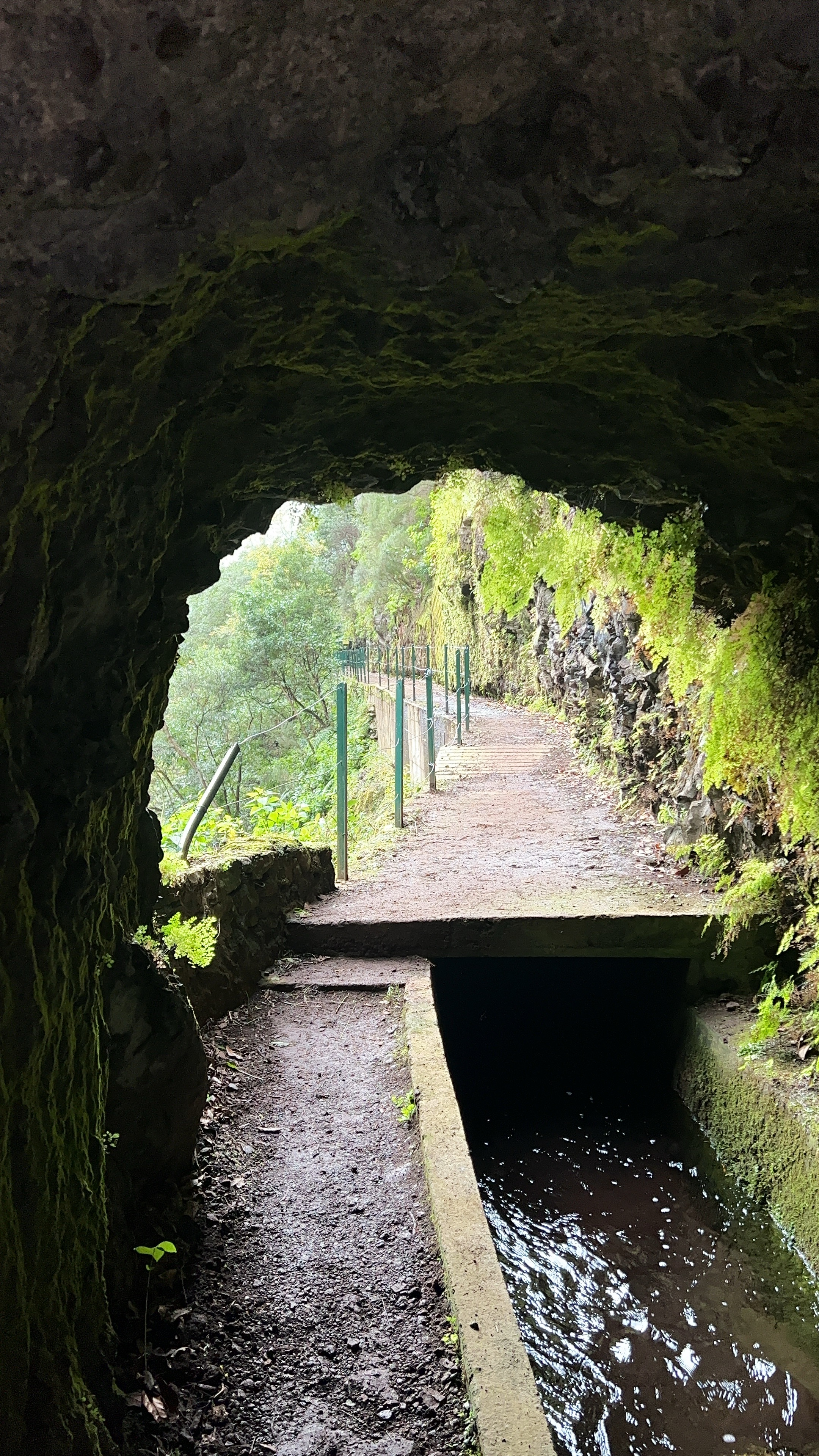
Madeira's levada network is one of the island's greatest treasures — and one of the main reasons German visitors return again and again. Levadas are narrow irrigation channels, built over five centuries to carry water from the wet mountains to the dry south. They now form a 2,500km network of hiking trails that wind through some of the most extraordinary landscapes in Europe.
The trails are mostly flat (the levadas maintain constant gradient) and well-marked. Most are suitable for regular walkers — you don't need mountaineering experience.
Top 5 Levada Walks for First-Time Visitors
- Levada do Caldeirão Verde — The most dramatic walk on the island. Four tunnels, towering laurisilva forest, ending at a 100m waterfall in a natural amphitheatre. 13km round trip from Queimadas. Allow 5–6 hours.
- Levada das 25 Fontes — Extremely popular, and deservedly so. Ends at a beautiful lake fed by 25 springs cascading down a rock face. Start from Rabaçal. 8km round trip, 3–4 hours.
- PR1 Vereda do Areeiro — High mountain ridge walk between Pico do Areeiro (1818m) and Pico Ruivo (1861m). Not a levada — this is proper mountain hiking, with vertical drops and iron steps. One of the most spectacular walks in Portugal.
- Levada do Furado — Long, atmospheric walk through the laurisilva from Ribeiro Frio to Portela. 11km one way, usually done with a taxi pickup at the end. 4 hours.
- Levada Nova / Levada do Moinho (Ponta do Sol) — A gentler walk through terraced banana plantations and small villages on the south coast. Great for beginners and families.
Wichtig: Always check trail conditions before setting out. Some levadas are temporarily closed for maintenance. Download the Madeira trails app (free) which shows real-time trail status. Wear proper hiking shoes — the paths can be wet and slippery even in summer.
Eating and Drinking — Essen und Trinken
Madeiran food is simple, generous and extraordinarily fresh. The island is surrounded by deep ocean — the fish and seafood are some of the best in the world. Here's what to order:
- Espada (Scabbardfish) — Madeira's most iconic dish. A deep-water black fish found only in Madeiran waters, served fried with banana and passion fruit. Sounds strange, tastes extraordinary.
- Lapas (Limpets) — Grilled on a hot stone with garlic and lemon butter. Order them as a starter everywhere.
- Espetada — Beef skewers grilled over laurel wood. The traditional preparation is a full skewer hung vertically over the fire. Usually served with milho frito (fried cornmeal cubes).
- Bolo do Caco — Flat bread made with sweet potato, served warm with garlic butter. The island's greatest contribution to carbohydrate civilisation.
- Poncha — Madeira's local spirit: aguardente (sugar cane brandy) mixed with honey and lemon. Every bar makes it slightly differently. Start carefully — it's stronger than it tastes.
Best Areas for Restaurants in Funchal
The Zona Velha (Old Town) has the highest concentration of good restaurants. Rua de Santa Maria is the main street — walk the length of it and look at menus before deciding. For seafood, the Lido area and the port waterfront have excellent options. Avoid restaurants with laminated picture menus near the cable car — these are tourist traps.
Getting Around — Mobilität auf Madeira
Renting a car is strongly recommended for exploring Madeira beyond Funchal. The island's road network is excellent — a tunnel system means you can cross the island in under an hour. Parking in Funchal is sometimes challenging but manageable.
Taxis and Uber are both available in Funchal and reasonably priced. For levada walks, many operators run minibus transfers to the trailheads — this is often the easiest option as some starting points have limited parking.
Public buses (run by Horários do Funchal and Rodoeste) connect all main villages but can be infrequent. For independent explorers, a car or campervan gives you freedom to stop at viewpoints spontaneously and reach the most remote corners of the island.
Day Trips and Must-See Spots
- Monte Palace Tropical Garden — Extraordinary botanical garden above Funchal, reachable by cable car. Allow 2–3 hours. Come back down via the famous wicker toboggan (Carreiros do Monte) — a genuinely unique Madeiran experience.
- Cabo Girão — One of the highest sea cliffs in Europe (589m). Glass walkway over the edge. 30 minutes from Funchal.
- Porto Moniz — Natural lava rock pools on the northwest coast. Perfect for swimming. The drive there via the north coast is spectacular.
- Santana — Village of traditional A-frame thatched houses (palheiros). North coast, surrounded by banana plantations and terraced fields.
- Pico do Areeiro — Drive to 1,818m altitude. Above the clouds on clear days. Sunrise from here is one of the most memorable things you'll do on Madeira.
- Funchal Farmers' Market (Mercado dos Lavradores) — Go on Friday or Saturday morning. Passion fruit, exotic flowers, fresh fish, local cheeses, homemade poncha. One of the best markets in Portugal.
Practical Information — Praktische Tipps
✈️ Flights from Germany
Direct flights from Frankfurt, Munich, Berlin, Düsseldorf, Hamburg, Stuttgart. ~3.5 hours. Operated by Condor, Eurowings, Ryanair, TAP and others.
💶 Budget Guide
Mid-range: €80–150/day per person incl. accommodation. Budget: €50–80/day. Luxury: €200+/day. Eating out is cheaper than Germany.
📱 SIM Cards
EU roaming applies — your German SIM works normally with no extra charges. Alternatively, local SIMs from NOS or MEO are inexpensive.
🏥 Health
European Health Insurance Card (EHIC/EHKV) valid. No vaccinations required. Tap water is safe to drink throughout the island.
Local insight: Madeira is not a beach holiday destination in the traditional sense. There are no long sandy beaches (Calheta and Prainha are the exceptions). Germans who come expecting Mallorca are sometimes surprised. Germans who come for the mountains, hiking, food and culture always come back.
Finding the Right Accommodation
Madeira has accommodation for every budget — from five-star hotels in Funchal to simple quintas (farm stays) in the mountains. The key decision is whether you want to be in Funchal (most convenient, best restaurants) or somewhere quieter.
For families or groups, renting an apartment or villa directly from local owners is usually better value than a hotel — and you get a kitchen, more space, and a more authentic experience. All the apartments on madeira.rentals are verified by our local team and contact is directly with the owner, with no platform fees.
Apartments and villas — direct from local owners
No booking fees. Direct contact with owners. Local support from our Funchal team.