Houses & Homes on Madeira Island: What to Expect Before You Rent
Updated April 2026 · By madeira.rentals · Local knowledge from Funchal
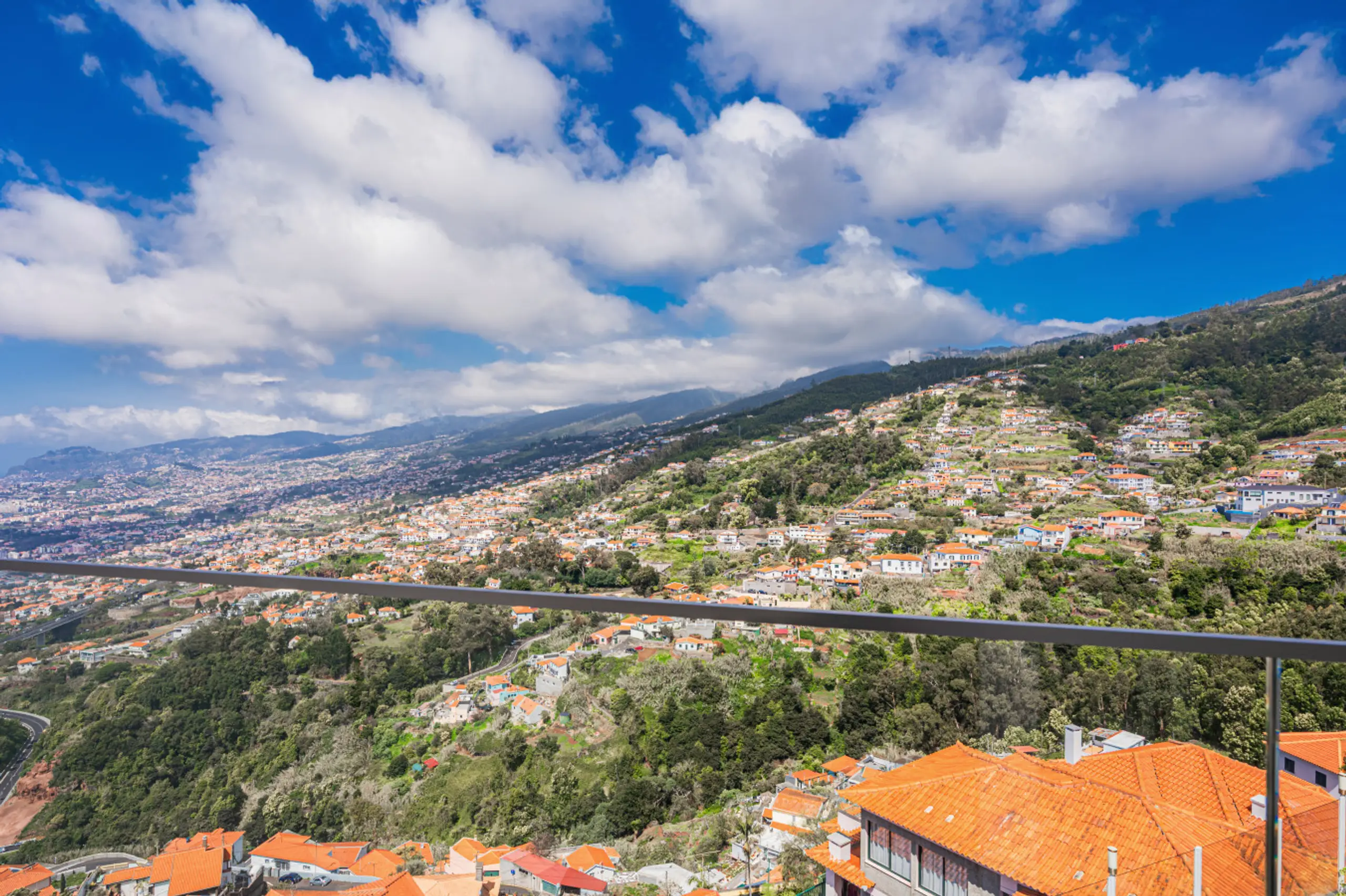
Madeira's housing stock is unlike anywhere else in Europe. The island's dramatic topography — steep valleys, coastal cliffs, terraced hillsides — means that even similar-sounding properties can be wildly different in character. A "sea view apartment" might mean floor-to-ceiling panoramas or a glimpse of ocean between rooftops. A "garden cottage" could be completely self-contained or share a terrace with the owner's family upstairs.
This guide is written from experience on the ground in Funchal. It won't tell you what the tourist brochures say — it'll tell you what locals and long-term residents actually know about renting homes on Madeira.
The 6 Main Types of Housing You'll Find
🏢 City Apartment (T1–T3)
📍 Funchal centre, Estrada Monumental💰 €900–2,000/month👥 1–6 guests
The most common type — standard Portuguese urban apartment in a block. Ranges from basic renovated units to beautifully redesigned modern flats. T1 = 1 bedroom + living room, T2 = 2 bedrooms, T3 = 3 bedrooms. In Funchal, older buildings (pre-1990) often lack lifts but have character and thicker walls. Newer blocks have parking, intercoms, and modern kitchens but can feel anonymous.
🌿 Hillside Cottage or Studio
📍 São Gonçalo, Monte, Camacha💰 €1,200–2,500/month👥 1–4 guests
Madeira's most distinctive housing type — a small self-contained unit built into or beside the owner's quinta (country estate). Often has private entrance, garden or terrace, panoramic views. Typically more character than city apartments. The trade-off: you need a car, roads can be steep and narrow, and supermarkets require a drive. Worth it for the tranquility and views.
🏡 Quinta (Traditional Estate)
📍 Island-wide, typically hillside💰 €1,800–5,000/month👥 4–12 guests
Traditional Madeiran manor house with gardens, often with original stonework and period features. Can be rented whole or as individual apartments within the estate. Swimming pools are common. These are typically older properties — expect thick walls, smaller windows, and occasionally aging plumbing. The atmosphere is unmatched: wisteria-covered pergolas, fruit trees, incredible views.
🌊 Ocean-Front Apartment
📍 Lido, Forum Madeira, Caniço💰 €120–200/night | €1,600–3,000/month👥 2–4 guests
Apartments within 200 metres of the coast in the hotel zone around Estrada Monumental. High demand year-round from tourists and expats. These tend to be well-maintained and fully furnished, as owners rely on rental income. Walking distance to natural pools, restaurants, the promenade, and the airport bus. Most popular for short stays of 1–4 weeks.
🏖️ East Coast Village House
📍 Santa Cruz, Caniçal, Machico💰 €800–1,400/month👥 2–6 guests
Traditional Portuguese village houses in Madeira's sunnier eastern parishes. Santa Cruz has the island's only sandy beach. Machico is historic and underrated. These houses are often older and may need some tolerance for quirks — but they offer genuine local neighbourhood life, lower prices, and 5 minutes to the airport. Ideal for longer stays with a car.
🌄 North Coast Rural Retreat
📍 São Vicente, Seixal, Santana, Porto Moniz💰 €700–1,500/month👥 2–8 guests
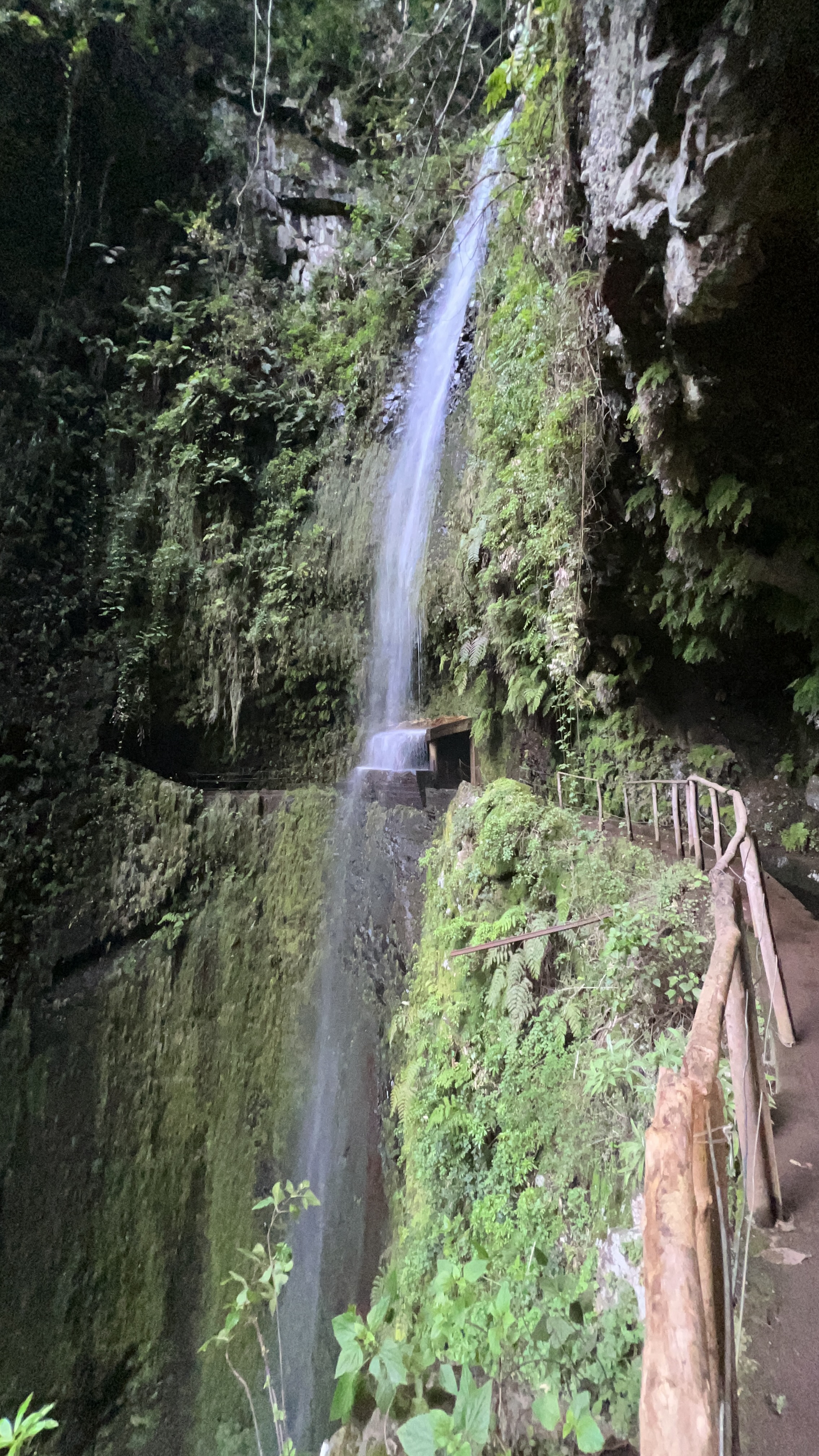
For those who want to escape everything. The north coast is greener, wilder and quieter than the south. Properties here are often traditional stone houses, sometimes completely isolated. You will need a car — there are no supermarkets nearby, and the roads to Funchal take 40–60 minutes. But the landscapes, waterfalls and natural pools are extraordinary, and prices are significantly lower.
What Nobody Tells You: The Real Quirks of Madeiran Housing
⚠️ The "sea view" problem
On Madeira, "sea view" can mean anything from a tiny sliver of ocean visible between two buildings, to a full 180° panorama. Always ask for photos taken from the balcony or window — not just the interior shots. A north-facing apartment in a valley will rarely see the ocean regardless of what the listing says.
Humidity and Walls
Madeira is a volcanic island in the Atlantic. Humidity is a fact of life, especially in older properties, north-facing rooms, and anything at altitude above 400m. Well-maintained properties manage this fine. In poorly maintained older buildings, you may find damp patches, mould in corners, or that your clothes take longer to dry. Always check photos carefully and ask owners directly.
Heating — or the Lack of It
This surprises almost every visitor from northern Europe: most Madeiran properties have no central heating. The island's mild climate (15–23°C year-round) means locals simply never built it in. In winter (December–February), evenings in Funchal can drop to 14–15°C, and at altitude (Monte, Camacha, Santana) considerably lower. Modern rentals often have portable electric heaters or air-conditioning with a heat function. Ask specifically before booking a winter stay.
💡 Local tip
Properties described as "renovated" on Madeira often means new tiles and a new kitchen — but not necessarily double-glazed windows or insulation. If warmth in winter matters to you, ask specifically: "Does this property have heating, and what type?"
Stairs and Accessibility
Madeira is extremely hilly. Many properties — especially older ones — involve significant stairs, both to get to the building and inside it. This applies to hillside cottages, older Funchal apartments, and nearly all traditional quintas. If you have mobility considerations or are travelling with young children and a buggy, confirm access carefully before booking.
Parking
In central Funchal, parking is genuinely difficult. Street parking in residential areas around Estrada Monumental requires a paid permit (zona azul) during daytime hours. Underground garages exist but are limited. If you're renting a car — which most visitors do — always confirm whether parking is included and what type. "Street parking available nearby" is not the same as a guaranteed space.
⚠️ Noise levels in central Funchal
The hotel strip around Estrada Monumental is lively at night, especially in summer and around New Year. Properties on or near this strip can be noisy on weekend evenings. If you're a light sleeper, ask whether the property faces the street or has a quieter courtyard aspect.
Internet
Good news: Madeira has excellent internet infrastructure. Most modern apartments in Funchal have fibre connections (100–500 Mbps). Older properties and rural locations may have ADSL or mobile broadband — adequate for video calls but not for large file transfers. Always ask for a speed test if you're working remotely. Madeira has become a popular digital nomad destination precisely because connectivity is generally reliable.
Water Temperature and Pressure
Mains water in Madeira is entirely from mountain springs and generally excellent quality — you can drink it straight from the tap in most of the island. Hot water comes from electric boilers in most properties (gas is rare). Check whether the boiler is adequate for the property size — in older buildings, a small boiler might only sustain a 10-minute shower before cooling.
Renting Short-Stay vs Long-Term: Key Differences
Short stay (4–30 nights): Furnished, utilities included, flexible. Typically 30–50% more expensive per night than long-term, but you have no obligations. Ideal for exploring the island before committing to a longer base.
Monthly rental (1–6 months): Usually furnished, sometimes with utilities. Significant discount vs nightly rates — typically 40–60% cheaper. Owners may ask for a deposit (1–2 months' rent). Check what "utilities included" actually means — sometimes only water is included; electricity is billed separately.
Annual rental (12+ months): Often unfurnished (you bring your own furniture or agree with the owner). Covered by Portuguese tenancy law (NRAU), which provides strong tenant protections. Lowest monthly cost. Suitable for those relocating to Madeira long-term.
💡 Negotiation tip
For monthly stays of 2+ months booked directly with owners (without Airbnb), there is almost always room to negotiate. Offering to pay 2–3 months in advance, or confirming a longer stay upfront, can reduce the monthly price by 10–20%.
How to Find the Best Properties (Without Overpaying)
The main platforms — Airbnb, Booking.com — have significant price mark-ups due to service fees and host commissions. A property listed at €1,500/month on Airbnb may be available directly from the owner for €1,200.
madeira.rentals lists properties directly from local Madeiran owners with 0% commission. Every listing includes direct WhatsApp contact and real pricing — what you see is what you pay.
Browse homes on Madeira
Hand-picked apartments, studios and holiday homes — all bookable directly with owners, no platform fees.
Ask for photos from the balcony or window (not just interior shots)
Confirm heating situation for winter stays
Check parking — included or not, what type
Ask about humidity/damp in older buildings
Request an internet speed test screenshot if working remotely
Clarify what "utilities included" means exactly
Confirm minimum stay and cancellation policy
Ask about stairs and accessibility if relevant
Check aspect (north/south facing) and noise exposure
Ask for exact address — not just "Funchal" — before booking
Frequently Asked Questions
Is Madeira good for a 3-month stay?
Absolutely. Many people use Madeira as a winter base — the climate is stable (17–22°C even in January), the food is excellent, internet is fast, and the expat and nomad community is welcoming. Monthly rentals in the €1,200–1,800 range for a well-equipped apartment are typical. Prices are lower than Lisbon, Porto or the Algarve for equivalent quality.
Do I need a car to rent a house in Madeira?
In central Funchal — no. The Estrada Monumental area is very walkable, with supermarkets, restaurants, pharmacies and the promenade all reachable on foot. Everywhere else on the island — yes. Public buses exist but are infrequent outside Funchal. A rental car costs €15–25/day and transforms your experience of the island.
What's the difference between a T1, T2 and T3 in Madeira?
Portuguese property is classified by number of bedrooms: T0 = studio (no separate bedroom), T1 = 1 bedroom + living area, T2 = 2 bedrooms, T3 = 3 bedrooms. The living area typically includes an open-plan kitchen and sitting room. This classification does not include bathrooms (typically 1 per T1, 2 per T3).
Can foreigners rent long-term in Madeira without a visa?
EU/EEA citizens can rent indefinitely. Non-EU citizens can rent for up to 90 days without a visa under the Schengen agreement. For longer stays, Portugal offers several visa routes including the Digital Nomad Visa (D8), Passive Income Visa (D7), and the NHR tax scheme. Consult a local lawyer or immigration specialist for your specific situation.
Where to stay in Madeira
Book direct from local owners — no Airbnb fees
19+ apartments and villas in Madeira from €70/night. Sea views, pools, Funchal centre. Instant WhatsApp reply.
Best Camping Spots in Madeira: Campsites & Van-Friendly Locations
From ancient laurisilva forests to dramatic ocean cliffs — here are the best places to sleep under the stars on Madeira Island, whether you're in a campervan or a tent.
Camping Rules on Madeira — What You Need to Know
Madeira is not a typical wild camping destination. The island is a UNESCO World Heritage site and much of its land is protected natural park. Unregulated wild camping — pitching a tent anywhere you like — is not permitted and can result in fines.
However, this doesn't mean you can't sleep in nature. There are four official campsites run by the regional government, and campervan travellers have a much wider range of options including designated parking areas, miradouros (viewpoints) with overnight-friendly policies, and private quinta farms that welcome van guests.
Van advantage: Campervans have significantly more flexibility than tents on Madeira. Sleeping in a parked vehicle in a public car park is generally tolerated, especially at viewpoints and trailheads outside urban areas.
Official Campsites on Madeira
These four campsites are run by the Madeira Regional Government and offer facilities including toilets, showers and electricity. Prices are very reasonable — typically €5–10 per person per night.
01
Parque de Campismo do Ribeiro Frio
🌿 Central Mountains — 860m altitude
The most atmospheric campsite on the island. Set deep in the laurisilva forest, this is proper cloud forest camping — cool, misty and utterly unlike anything else in Europe. The famous Levada do Furado trail starts nearby, leading to the stunning Balcões viewpoint.
The facilities are basic but clean. Mornings here are magical — the forest drips with moisture and the birds are unlike anywhere else on the island.
🌲 Laurisilva forest🥾 Levada trails nearby🚿 Showers & toilets❄️ Cool even in summer
02
Parque de Campismo de Porto Moniz
🌊 Northwest Coast
The most popular campsite on Madeira, and for good reason. Porto Moniz is famous for its spectacular natural lava rock pools — essentially swimming pools carved by volcanic activity, filled with Atlantic seawater. The campsite is just minutes from the pools on foot.
The northwest coast has a wilder, more rugged feel than the south. Waves here are serious, the cliffs dramatic, and the sunsets face directly into the Atlantic.
Santana is one of Madeira's most charming villages, famous for its traditional palheiros — triangular thatched-roof houses that have become the island's most recognisable symbol. The campsite sits in the lush green north coast landscape, surrounded by banana plantations and terraced fields.
The north coast receives more rainfall than the south, which keeps it intensely green year-round. It also means cooler temperatures and dramatic misty mornings.
🏚 Traditional houses🌱 Lush green landscape🚿 Full facilities🥾 Levada do Caldeirão Verde nearby
04
Parque de Campismo da Ponta do Pargo
🌅 Westernmost Point of Madeira
If you want to feel like you're at the edge of the world, this is the spot. Ponta do Pargo is Madeira's westernmost point — beyond here there's nothing but open Atlantic until you reach North America. The lighthouse perched on the cliff is one of the most photographed spots on the island.
Sunsets here are extraordinary. The cliffs drop hundreds of metres into the sea and the light at dusk turns the whole landscape golden. Worth timing your trip to spend at least one night here.
🏛 Historic lighthouse🌅 Best sunsets on Madeira🌊 Dramatic sea cliffs🚿 Basic facilities
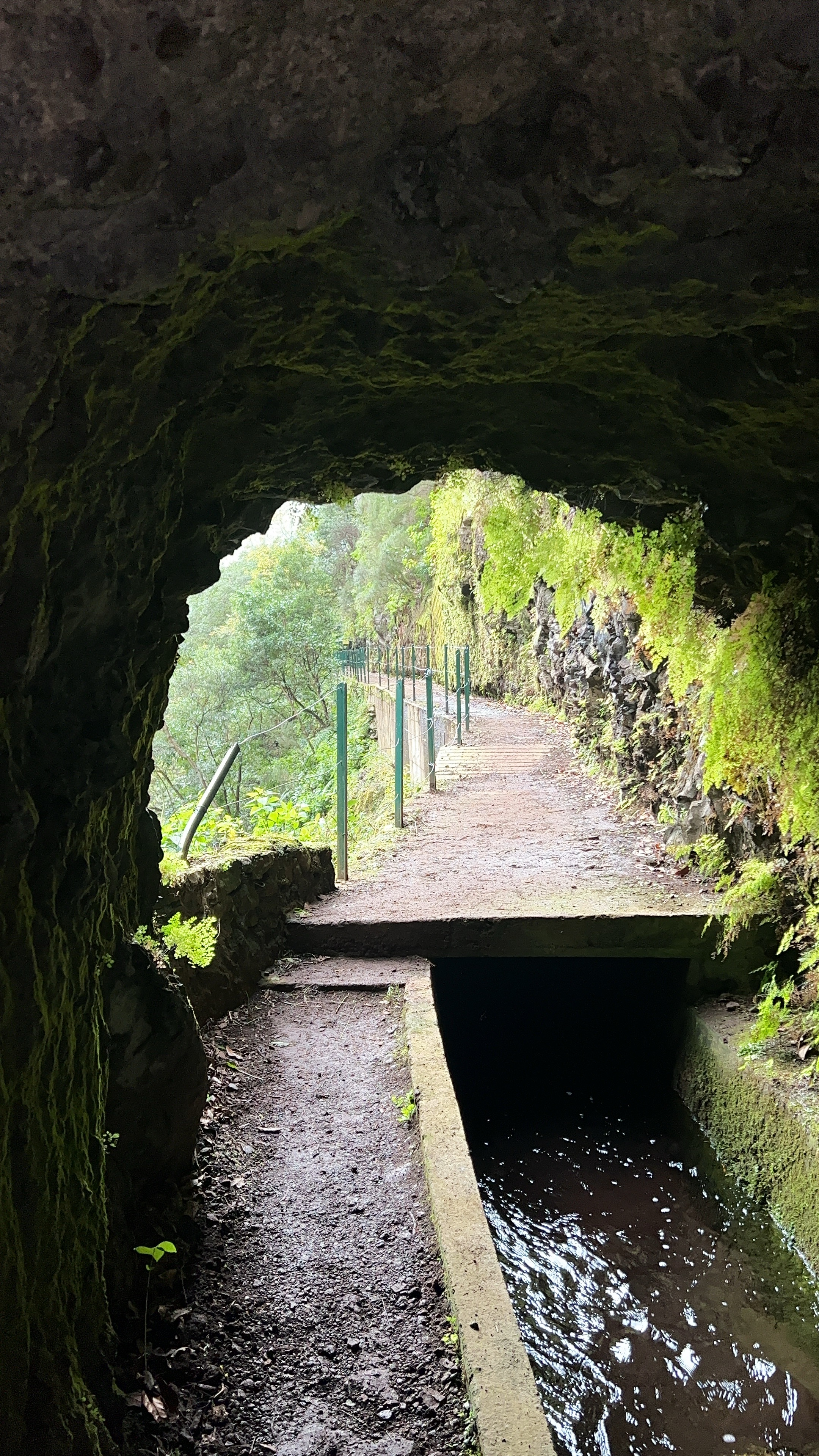
Levada trails — the most magical walks on Madeira, right from your van
Best Van Overnight Spots
Beyond the official campsites, campervan travellers have access to a wider network of overnight spots. These are places where sleeping in your van is generally accepted — viewpoints, trailhead car parks, and quiet coastal areas.
We share a personal curated list of our favourite van spots with every booking — locations we've discovered over years of living on the island that don't appear in any guidebook. Here are a few we can mention publicly:
Fanal — Ancient laurisilva forest in Paul da Serra. The twisted til trees here are hundreds of years old and look prehistoric in the morning mist. The car park is large and overnight stays are common.
Pico do Arieiro area — At 1,818m, the views from the top are above the clouds. The car park is open 24 hours and the sunrise from here is one of the most spectacular things you'll see on Madeira.
Miradouro da Boca da Corrida — A dramatic viewpoint looking down into Curral das Freiras (Valley of the Nuns). Quiet, accessible by van, and extraordinarily beautiful at dawn.
Calheta beach area — The south coast around Calheta has Madeira's only sandy beach (the sand is imported, but real). Quiet overnight spots nearby.
Local tip: Always leave your overnight spot cleaner than you found it. Madeira's natural beauty is its greatest asset — van travellers who respect this are always welcome back.
Best Season for Camping on Madeira
The beauty of Madeira is that camping is possible year-round. The island has one of the most stable climates in the world — temperatures rarely drop below 15°C even in winter, and snow only falls above 1,500m altitude.
April–June: The best overall season. Wildflowers everywhere, green landscape, fewer crowds than summer, comfortable temperatures.
September–October: Harvest season. The mountains are golden, the sea is warm from summer, and the island is quieter than August.
July–August: Peak season. More crowded and slightly more expensive, but the weather is guaranteed and the sea is at its warmest.
November–March: Off season but still beautiful. Some campsites close, but the north coast levada walks are at their most dramatic with waterfalls in full flow.
Ready to camp in Madeira?
Our campervans come with everything you need — and a personal map of the best spots.
🍪 We use cookies to analyse traffic and measure ad performance. By clicking "Accept", you consent to our use of analytics and marketing cookies. Privacy Policy